
Trampolines: Jumping into Danger
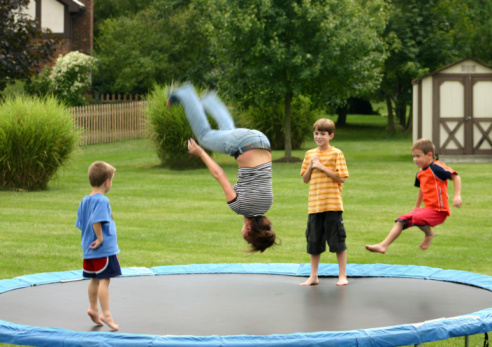
When someone is hurt on a trampoline, whether it sits in a backyard, at a birthday party, or inside a commercial trampoline park, the property owner or operator can be held responsible if their negligence contributed to the injury. Colorado law generally requires anyone who controls a property to keep it reasonably safe for the people they invite onto it, and a trampoline that is poorly maintained, left unsupervised, or missing basic safety equipment can turn a backyard toy into the basis of a premises liability claim.
At Mintz Law Firm, we have watched trampoline injuries evolve from a minor backyard concern into one of the more serious sources of catastrophic injury claims we see involving children and young adults in Colorado. Families who are dealing with a broken bone, a head injury, or worse often do not know where to start, are unsure whether the homeowner’s insurance applies, and are not sure whether the equipment itself may have contributed to what happened. That is where a personal injury claim against the responsible party may become an option worth exploring, and understanding how liability works in these cases is the first step.
How Common Are Trampoline Injuries in Colorado?
Trampolines look harmless, but the injury numbers tell a different story. According to the American Academy of Pediatrics’ patient education site, HealthyChildren.org, more than 800,000 children were injured on trampolines between 2009 and 2018, and trampoline accidents are linked to roughly 110,000 emergency room visits in the United States every year. The AAP has also found that injuries sustained at commercial trampoline parks lead to surgery at roughly twice the rate of injuries from other trampoline settings.
Many of these injuries are minor sprains and strains, but a significant share are far more serious. Fractures, dislocations, and head and neck injuries are common outcomes when multiple jumpers collide, when a jumper attempts a flip or somersault, or when someone lands wrong after falling off the mat. The AAP continues to recommend that children younger than six should not use a trampoline at all, and that home trampoline use carries risks that safety pads, nets, and enclosures have not been shown to meaningfully reduce.
Two people jumping at the same time is one of the most frequently cited causes of serious trampoline injury, largely because a heavier or older jumper can send a lighter, smaller child into the air at an unpredictable angle. Falls off the trampoline entirely, rather than injuries that occur on the mat itself, are also a leading cause of fractures and head injuries, particularly when the trampoline is not surrounded by a net or is placed on a hard surface such as a patio or driveway. These patterns matter in a legal claim because they often point directly to a specific, preventable failure, such as a missing net, a broken spring cover, or a lack of supervision, rather than an injury that simply could not have been avoided.
Who Can Be Held Liable for a Trampoline Injury?
Liability in a trampoline accident depends heavily on who controlled the property and what that person knew, or should have known, about the risk. Colorado’s premises liability statute divides visitors into categories, including invitees, licensees, and trespassers, and the property owner’s duty of care changes depending on which category applies. A guest invited to a birthday party is generally owed a higher duty of care than someone who wandered onto the property uninvited.
In practice, this means a homeowner who lets neighborhood children use a trampoline without supervision, without a safety net, or without warning guests about a known defect can potentially be liable for resulting injuries. The same principle can extend to landlords, property management companies, and trampoline park operators, each of whom may owe a duty to inspect and maintain the equipment they allow the public to use. A premises liability claim involving a trampoline accident typically turns on whether the property owner acted reasonably given what they knew about the equipment and how it was being used.
A property owner’s knowledge of a hazard often becomes the central question in these claims. If a spring cover was torn, a leg was bent, or the netting had a gap, and the owner knew about the condition but did not repair it or warn guests, that knowledge can support a finding of negligence. Colorado also recognizes comparative negligence, meaning an injured person’s own conduct, such as ignoring a posted warning or attempting a risky stunt, can reduce, but does not automatically eliminate, the compensation available if the property owner also bears some responsibility for the accident.
Colorado’s Attractive Nuisance Doctrine and Child Trampoline Injuries
Because trampolines are, by design, an object that draws children onto a property, they are frequently discussed alongside Colorado’s attractive nuisance doctrine. This legal theory recognizes that children may not understand or appreciate the dangers of certain conditions on a property, including trampolines, pools, and other recreational equipment, and it can extend a property owner’s duty of care even to children who trespass onto the property to use the trampoline.
This does not mean every child injury automatically results in liability. Courts look at whether the owner knew, or reasonably should have known, that children were likely to be attracted to the trampoline, and whether the owner took reasonable steps to prevent access or reduce the risk of injury. Families exploring a child injury claim after a trampoline accident often need to establish these facts early, since the property owner’s knowledge of the risk can be central to the case.
Fencing, locked gates, and removable ladders are all measures that can factor into whether a court views a trampoline as an obvious hazard the owner failed to address. A trampoline placed in a front yard visible from the street, or left accessible without any barrier, can be treated differently than one enclosed by a fence with a locked gate, since the level of accessibility affects how foreseeable it was that neighborhood children would use it without permission.
Homeowners Insurance and Trampoline Accident Claims
Most trampoline injury claims involving a residential property are ultimately paid through the homeowner’s insurance policy rather than out of the homeowner’s own pocket. Standard homeowner’s and renter’s policies often include liability coverage for injuries that occur on the insured property, and this coverage can extend to trampoline accidents involving guests, neighbors, or their children.
That said, coverage is not automatic. Some insurers exclude trampoline-related injuries entirely, require a rider or additional premium before extending coverage, or impose conditions such as mandatory netting or fencing around the equipment. An insurance company may also attempt to minimize a claim by arguing that the injured person assumed the risk or that the homeowner’s policy does not apply to the specific circumstances of the accident. Reviewing the applicable policy language early can make a meaningful difference in how a claim is handled.
Some homeowners also carry an umbrella policy that provides liability coverage beyond the limits of a standard homeowner’s policy, which can matter when a trampoline injury involves significant medical expenses. Because policy language, exclusions, and endorsements vary so widely between insurers, families are often better positioned when the specific policy is reviewed early, rather than relying on a verbal assurance from an adjuster about what is or is not covered.
When a Defective Trampoline Causes an Injury
Not every trampoline injury stems from how the equipment was used or supervised. In some cases, the trampoline itself, or a component such as the frame, springs, mat, or enclosure netting, may have been defectively designed or manufactured, or it may have lacked adequate warnings about known risks. When a defect is the root cause of an injury, a product liability claim against the manufacturer or seller may be available in addition to, or instead of, a premises liability claim against the property owner.
Establishing a product defect generally requires evidence such as the trampoline’s assembly instructions, maintenance history, and any recall or complaint history associated with the specific model. Preserving the trampoline and its components after an accident, rather than discarding or repairing them, can be an important step in supporting this type of claim.
The Consumer Product Safety Commission maintains a public database of product recalls, and trampoline models have occasionally appeared on it for structural or safety-related defects. Checking whether a specific model has ever been the subject of a recall or a safety notice can help establish whether a manufacturer knew, or should have known, about a defect before an injury occurred.
Trampoline Parks Versus Backyard Trampolines: Liability Differences
Commercial trampoline parks have grown rapidly across Colorado, and while they are subject to some of the same premises liability principles as a private backyard, they raise additional legal questions. Most parks require visitors to sign a liability waiver before jumping, and these waivers often attempt to limit the park’s responsibility for ordinary accidents. A waiver, however, generally cannot shield an operator from liability for gross negligence, such as failing to maintain equipment, ignoring known hazards, or failing to enforce basic safety rules like limiting the number of jumpers per court. Whether a particular waiver holds up in a specific case often depends on how it was worded, what it was intended to cover, and whether the conduct at issue goes beyond an ordinary risk of jumping.
Trampoline parks also owe a duty to properly train staff, monitor jumping areas, and repair or remove damaged equipment such as torn mats or exposed springs. When a park fails to meet these obligations and a visitor is injured, the resulting claim may proceed even where a waiver was signed, depending on how the waiver is drafted and what conduct caused the injury.
Incident reports created by park staff at the time of an accident can become important evidence later, since they often document how many people were on a court, what activity was underway, and whether staff observed or responded to the accident. Requesting a copy of any incident report, and noting the names of employees or witnesses present, can help preserve details that might otherwise be forgotten or disputed later.
Common Trampoline Injuries and Their Long-Term Effects
The physical toll of a trampoline accident can range from a short recovery to a lifetime of medical care. Sprains, strains, and simple fractures are the most frequent outcomes, but trampoline accidents are also a recognized cause of more severe harm, including compound fractures, dislocated joints, and injuries to the head, neck, and spine. Collisions between jumpers and falls off the mat are among the most common mechanisms behind the more serious injuries.
Some trampoline accidents result in spinal cord injuries that can cause lasting or permanent effects on mobility, and others involve traumatic brain injuries from a hard fall or collision. These injuries can affect a child’s development, education, and long-term independence, and the associated medical, therapy, and equipment costs can extend well beyond the initial emergency room visit.
Beyond the physical recovery, families often absorb costs that are easy to overlook in the immediate aftermath of an accident, including missed work to attend medical appointments, transportation to specialists, home modifications, and ongoing physical or occupational therapy. When an injury results in a permanent limitation, these costs can continue for years, which is one reason a full accounting of damages typically looks well beyond the initial hospital bill.
Steps to Take After a Trampoline Accident
What happens in the hours and days after a trampoline accident can affect a family’s ability to pursue a claim later. Evidence about a trampoline’s condition can change quickly once it is repaired, replaced, or simply put away for the season, and memories of exactly what happened tend to fade the longer a family waits to write them down. A few practical steps can help protect both the injured person’s health and their legal options.
- Seek prompt medical attention. A medical evaluation documents the injury and creates a record connecting it to the accident, even if the injury initially seems minor.
- Photograph the trampoline and the scene. Images of the mat, springs, netting, and surrounding area can preserve evidence that may change once the equipment is repaired or removed.
- Identify who controlled the property or equipment. Note whether the trampoline was on private property, at a rental home, or inside a commercial park, since this affects who may be responsible.
- Avoid signing insurance paperwork right away. Early settlement offers or liability releases can limit options before the full extent of an injury is known.
- Keep records of medical visits and expenses. Bills, therapy notes, and missed school or work days can all support a future claim.
Families should also be aware that Colorado applies specific timing rules to injury claims involving minors, and a statute of limitations for a minor’s injury claim can differ from the deadline that applies to an adult in the same accident. Readers who want more background on typical trampoline injury patterns may also find our related post on trampoline injuries and their common causes helpful.
Frequently Asked Questions About Trampoline Injury Claims in Colorado
Who is liable if someone is injured on my trampoline?
Liability generally depends on whether the property owner acted reasonably in maintaining the trampoline and supervising its use. A homeowner who fails to provide adequate supervision, ignores a known defect, or allows unsafe use, such as multiple jumpers at once, may be held responsible for resulting injuries. The visitor’s status as an invitee, licensee, or trespasser can also affect the duty of care owed, and Colorado’s attractive nuisance doctrine can extend that duty to children who were not formally invited onto the property.
Does homeowners insurance cover trampoline accidents?
In many cases, yes. Standard homeowners and renters insurance policies often include liability coverage that can extend to trampoline injuries involving guests or their children. Coverage is not guaranteed, however, since some insurers exclude trampolines entirely, require an additional rider or premium, or condition coverage on having a net, fencing, or other safety equipment in place. Reviewing the specific policy language, and any endorsements or exclusions attached to it, is an important step after an accident rather than relying on general assumptions about what a policy covers.
Can I file a claim if my child was injured on a neighbor’s trampoline?
You may be able to pursue a claim against the neighbor’s homeowners insurance if the injury resulted from unsafe conditions or inadequate supervision. Factors such as whether your child was invited, whether the trampoline had known defects, and whether Colorado’s attractive nuisance doctrine applies can all affect the strength of a potential claim.
What is the attractive nuisance doctrine, and how does it apply to trampolines?
The attractive nuisance doctrine recognizes that certain conditions, including trampolines, pools, and playground equipment, can draw children onto a property even without an invitation. Under this doctrine, a property owner who knows children are likely to be attracted to a trampoline may owe a duty of care to those children, even if they technically trespassed to use it.
How long do I have to file a trampoline injury claim in Colorado?
Colorado applies specific filing deadlines to personal injury claims, and those deadlines can work differently when the injured person is a minor, since the clock may not start running until the minor reaches a certain age depending on the type of claim involved. Because these timelines vary based on the facts of the accident, the type of claim, and the age of the injured person, it is best to discuss the specific dates that apply to your situation with an attorney as soon as possible after the accident rather than assuming a general deadline applies.
What should I do immediately after a trampoline accident?
Seek medical attention right away, even if the injury seems minor, and photograph the trampoline, the surrounding area, and any visible injuries. Identify who owns or controls the property or trampoline park, and keep records of medical treatment and related expenses. Avoid signing insurance paperwork or accepting a settlement offer before understanding the full extent of the injury.
Contact Mintz Law Firm About Your Trampoline Injury Claim
Mintz Law Firm has represented Colorado families in premises liability, product liability, and catastrophic injury claims, including cases involving children injured on residential and commercial property. We approach trampoline injury claims by looking closely at who controlled the property or equipment, what that person knew about the risks, and what insurance coverage may apply, so that families are not left guessing about their options. Every trampoline case is different, and the specific facts, including where the accident happened, who was present, and what the equipment looked like, all shape what a claim can realistically accomplish.
If you or your child has been injured on a trampoline, whether in a backyard, at a rental property, or at a commercial trampoline park, the circumstances surrounding the accident can meaningfully affect what compensation may be available. Our team can review the details of what happened, help identify the insurance coverage and parties that may be involved, and explain the potential paths forward in plain language. To discuss your situation, please contact Mintz Law Firm.