
Colorado’s Lane Filtering Rules and Your Claim
Key Takeaways: Colorado still bans true lane splitting in moving traffic. Since August 7, 2024, however, riders on two-wheeled motorcycles may lane filter past stopped vehicles if all five legal conditions are met, including a speed of 15 mph or less. The speed limit won’t decide a Lakewood crash claim by itself, but insurers often use it to argue how fault should be split. Under Colorado’s modified comparative negligence rule, you can generally recover only if your fault is less than the fault of the party or parties you sue, and any award is reduced by your share of fault. Evidence such as GPS data, helmet camera footage, surveillance video, and witness statements can help show that you filtered lawfully and that the driver failed in their duty of care. Injured riders generally have three years to file a lawsuit over a motor vehicle crash. Claims against a public entity or public employee usually need written notice within 182 days. The filtering exception is set to expire on September 1, 2027, so riders should check that it was in effect on the date of their crash.
If you were hurt while filtering between stopped cars in Lakewood, the 15 mph limit is one of the first things an insurer may look at. Colorado allows a narrow form of lane filtering, but only when every legal condition is met. A rider who stays at or under 15 mph, passes only stopped vehicles, and has enough space to pass safely is generally in a stronger position than one who was moving faster or filtering through moving traffic. The speed limit does not decide your case by itself, but it can shape how fault is argued and how much you may recover.
If a driver injured you during a Lakewood motorcycle crash, Mintz Law Firm can review how the filtering rules apply to your situation. Call 303-732-8919 or contact us now to talk about your options.
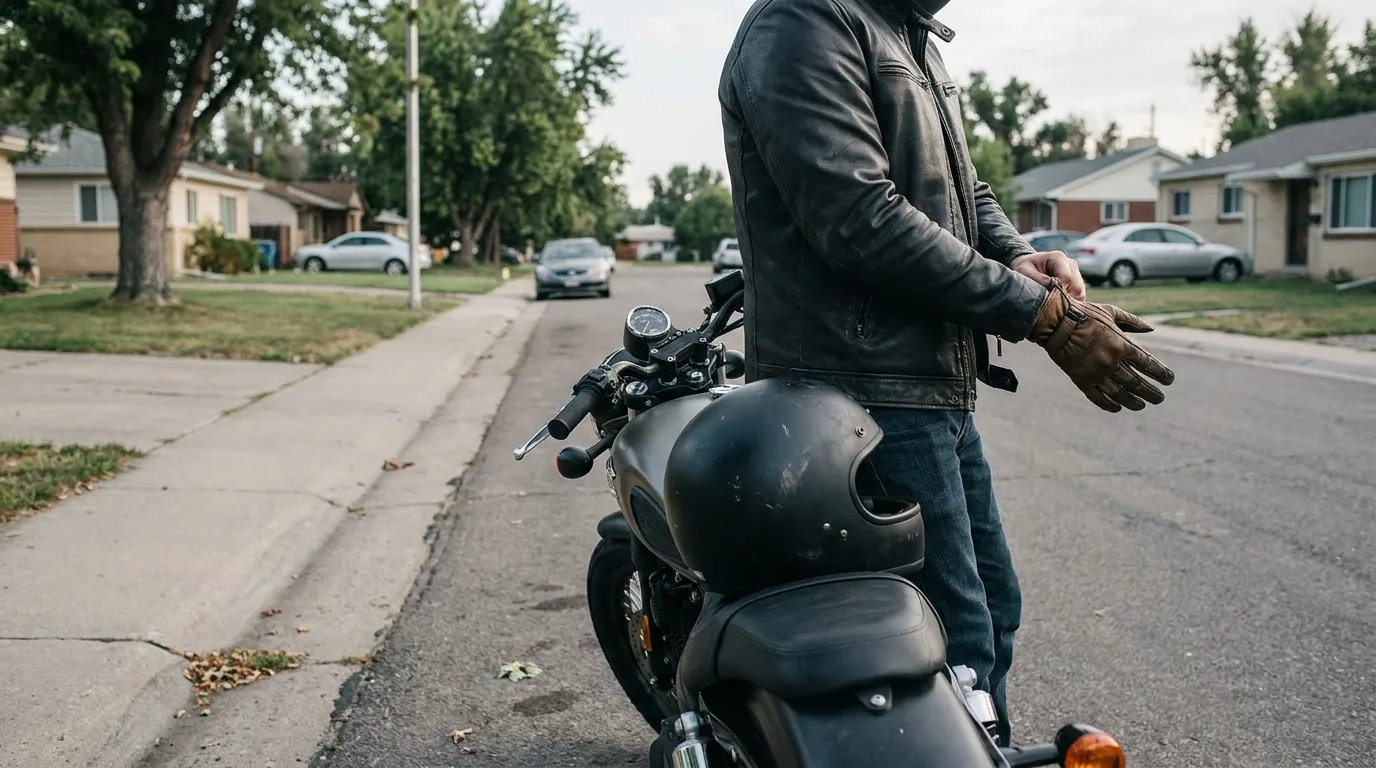
Lane Splitting Colorado Law: What Is Still Banned
The general rule in Colorado has not changed: riding between lanes is still prohibited. Under C.R.S. § 42-4-1503(3)(a), a person may not drive a motorcycle or autocycle between lanes of traffic or between adjacent rows of vehicles, except as the filtering exception allows. True lane splitting in moving traffic is still illegal statewide, including on Wadsworth Boulevard, Colfax Avenue, and Sixth Avenue in Lakewood.
Colorado created a narrow exception called lane filtering, which took effect on August 7, 2024. Filtering means passing stopped vehicles at low speed while traveling in the same direction. Many riders use "lane splitting" and "lane filtering" interchangeably, but Colorado law treats them differently, and that difference can matter a great deal in an injury claim.
Only Two-Wheeled Motorcycles Qualify
The filtering exception applies only to two-wheeled motorcycles. C.R.S. § 42-4-1503(3)(b)(I) permits "the driver of a two-wheeled motorcycle" to pass another vehicle in the same lane under set conditions. Autocycles and three-wheeled motorcycles cannot lawfully filter. If you ride a trike, an insurer may argue that any filtering was unlawful from the start.
The Five Colorado Lane Filtering Requirements
Lane filtering is legal only when all five statutory conditions are met at the same time. Under C.R.S. § 42-4-1503(3)(b)(I)(A)-(E), failing to meet even one may make the maneuver unlawful. The table below summarizes each requirement.
| Condition | What the Statute Requires |
|---|---|
| (A) Vehicle being passed | Must be stopped |
| (B) Adjacent lanes | Vehicles going the same direction must be stopped |
| (C) Lane width | Space must be wide enough to pass safely |
| (D) Speed | Motorcycle must travel 15 mph or less |
| (E) Conditions | Must allow the rider to operate prudently |
Because these conditions work together, a rider who meets only four of them may still face fault arguments. For example, a rider moving at 10 mph through a gap that is too narrow could still be accused of breaking the law. Outcomes depend on the specific facts and the evidence.
Where Filtering Is Never Allowed
Even when all five conditions are met, Colorado bars filtering in certain locations. Under C.R.S. § 42-4-1503(3)(b)(III), riders may not filter:
- On the right shoulder
- To the right of a vehicle in the far-right lane on a highway that is not limited-access
- In a lane of opposing traffic
When Filtering Must Stop
A rider must stop filtering once the vehicles being passed start moving. C.R.S. § 42-4-1503(3)(b)(II) sets this limit. A crash that happens just as a light turns green can raise hard questions about whether the rider was still filtering lawfully. Video, signal data, and witness accounts may become critical.
Why the 15 MPH Lane Filtering Limit Exists
The 15 mph cap reflects a policy goal of keeping the speed difference between motorcycles and nearby traffic small. Published lane filtering safety research indexed by the Transportation Research Board examines how speed differences affect crash risk. That research offers general background only and is not a source of Colorado legal rules.
Federal safety agencies have also weighed in. The National Transportation Safety Board has issued federal motorcycle safety recommendations that generally call for data collection and review. Colorado’s approach also relies on data. Under C.R.S. § 42-4-1503(3)(c), the Colorado Department of Transportation must report to the General Assembly by January 1, 2027, on rear-end collisions, the severity of rear-end crashes in heavy traffic, and side-swipe collisions while filtering at 15 mph or less, both before and after August 7, 2024.
The Sunset Date Matters
The filtering exception is scheduled to expire. C.R.S. § 42-4-1503(3)(b)(IV) states that the subsection "is repealed, effective September 1, 2027." Unless the legislature extends it, filtering is expected to become unlawful again after that date. Lakewood riders should confirm that the law was in effect on the date of their crash.
How Filtering Affects a Lakewood Motorcycle Claim
Whether you were filtering lawfully can directly affect how fault is divided. Colorado follows a modified comparative negligence rule under C.R.S. § 13-21-111. Generally, an injured person can recover damages only if their fault is less than the fault of the person or people they are suing, and any award is reduced by their share of fault. If an insurer claims you were going 20 mph, or that traffic had started moving, it may try to raise your fault percentage to reduce or block your recovery.
Drivers also owe riders legal duties, and those duties may support your claim. Under C.R.S. § 42-4-1503(1), every motorcycle is entitled to full use of a traffic lane, and other drivers may not operate in a way that deprives a rider of that use. Insurers may dispute how this applies during filtering. Even so, a driver who swerves into a filtering rider, opens a door without looking, or changes lanes without checking may have breached the general duty of care. Proving negligence still requires showing duty, breach, causation, and damages.
💡 Pro Tip: If your bike has a GPS-enabled app, helmet camera, or connected dashboard, save that data right away. Speed and location records may help show you stayed at or under 15 mph.
Common Insurer Arguments and How to Respond
Insurance adjusters often look for any detail that suggests a rider broke the filtering rules. They may claim the lanes were too narrow, the rider was speeding, or adjacent traffic was moving. Strong evidence can help rebut these arguments, including:
- Photos of lane widths, vehicle positions, and damage
- Traffic camera or nearby business surveillance footage
- Witness names and statements
- Police reports from the Lakewood Police Department
- Medical records documenting every injury and treatment
Talking with a Lakewood motorcycle accident lawyer early may help preserve this evidence before it disappears. Surveillance footage is often overwritten within days or weeks, and witness memories fade. To learn more about your broader rights as a rider, review our guide on Colorado motorcycle law.
Deadlines and Damages After a Lakewood Motorcycle Crash
Colorado generally gives injured people three years to file a negligence lawsuit after a motor vehicle crash. This deadline comes from C.R.S. § 13-80-101(1)(n). Exceptions exist only in limited circumstances. Claims against a public entity or public employee, such as a crash involving a government vehicle, generally require written notice under the Colorado Governmental Immunity Act, C.R.S. § 24-10-109, within 182 days after the injury is discovered. This notice requirement is separate from the deadline to file a lawsuit.
Damages in a Lakewood motorcycle injury claim may include medical bills, lost wages, and pain and suffering. Colorado caps noneconomic damages under C.R.S. § 13-21-102.5. The limits depend on when the claim accrued, and they increased for claims accruing on or after January 1, 2025. Careful records of medical treatment and missed work can help support the full value of your losses.
Frequently Asked Questions
1. Is lane splitting legal in Colorado?
No. True lane splitting in moving traffic remains illegal under C.R.S. § 42-4-1503(3)(a). Colorado permits only lane filtering by two-wheeled motorcycles between stopped vehicles at 15 mph or less, and only when all statutory conditions are met.
2. Can I still recover compensation if I was filtering unlawfully?
Possibly. Under C.R.S. § 13-21-111, you may still recover if your fault is less than the fault of the party or parties you sue. Your award would be reduced by your percentage of fault, and an insurer may argue that breaking the filtering statute is itself evidence of negligence.
3. What if traffic started moving right before the crash?
C.R.S. § 42-4-1503(3)(b)(II) requires riders to stop filtering once the vehicles being passed begin moving. Evidence of exact timing may become central to how fault is assigned.
4. Does the filtering law apply to my three-wheeled motorcycle?
No. The exception covers only two-wheeled motorcycles under C.R.S. § 42-4-1503(3)(b)(I).
5. Will the lane filtering law still exist after 2027?
The exception is set to be repealed on September 1, 2027, under C.R.S. § 42-4-1503(3)(b)(IV), unless the legislature extends it.
Protecting Your Rights as a Lakewood Rider
Colorado’s 15 mph filtering limit is one of several conditions that can shape fault in a motorcycle crash. True lane splitting is still banned, filtering is allowed only under narrow conditions, and the exception may sunset in 2027. Drivers still owe riders a duty of care, including respecting a motorcycle’s right to full use of a lane. Evidence, timing, and legal deadlines can all affect what you may recover.
If a careless driver hurt you while you were riding, Mintz Law Firm can help you understand how lane splitting Colorado rules may apply to your case. Call 303-732-8919 or schedule your consultation today to discuss your claim.
Disclaimer: This content is for informational purposes only and is not legal advice. Every case is unique, and results may vary. Consult an attorney about your specific circumstances.