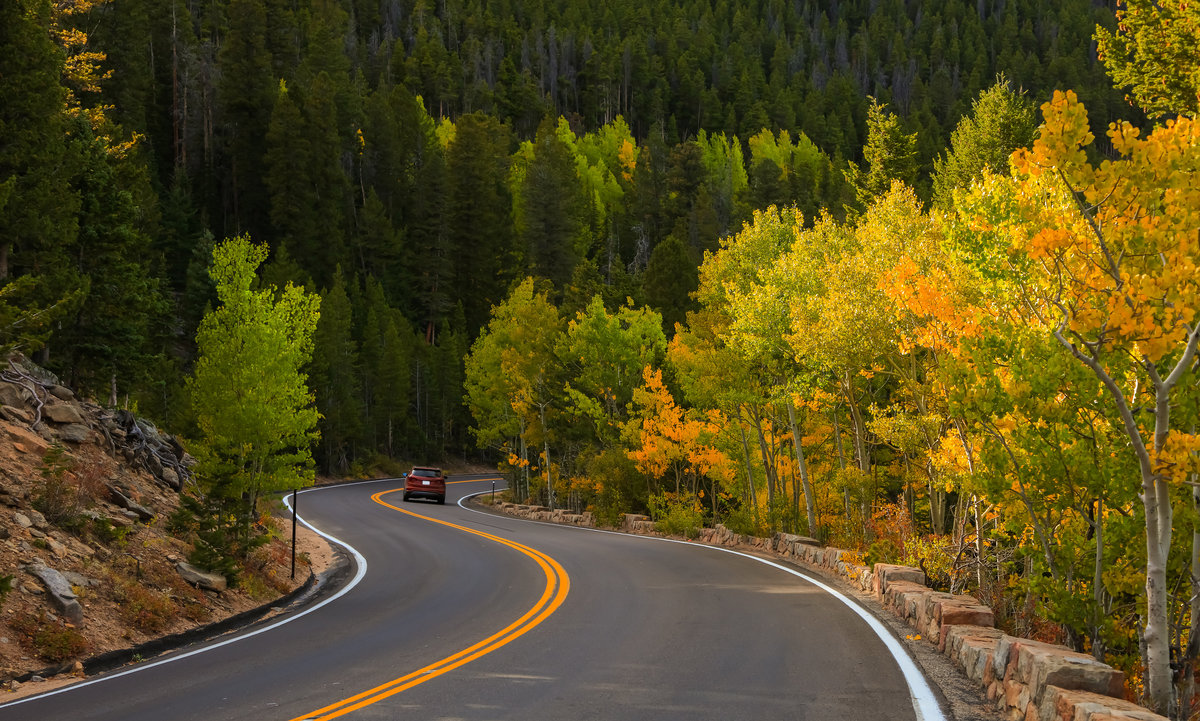
Colorado’s mountain passes don’t just test your nerves; they operate under an entirely different set of rules than the highways many drivers are used to. A stretch of road that looks wide open can turn lethal in seconds when elevation, hairpin curves, steep grades, and unpredictable weather collide, and the speed limits posted along those corridors exist for exactly that reason. When a driver ignores or misunderstands those limits, and someone gets hurt, the legal consequences can be significant.
At Mintz Law Firm, we help injured Coloradans and out-of-state visitors navigate the complex aftermath of mountain road accidents, and understanding the speed limit framework is often one of the first places we start.
Why Mountain Pass Speed Limits Are Lower Than Standard Highways
Colorado’s standard highway speed limits typically range from 65 to 75 mph on interstate corridors like I-25 and I-76. Mountain pass roads, however, are governed by a different standard entirely. Many of these routes top out at 35 to 55 mph, and in some sections, limits drop even lower, especially near switchbacks, construction zones, and heavily trafficked scenic pull-offs.
The Engineering Behind the Numbers
The Colorado Department of Transportation sets speed limits based on road geometry, sight distance, historical crash data, and environmental conditions. Mountain passes like Loveland Pass (US-6), Red Mountain Pass (US-550), and Vail Pass (I-70) present geometric challenges that flat highways simply don’t: narrow lanes, limited sight lines around blind curves, steep runaway grades, and virtually no shoulder for error recovery. These factors push posted limits far below what drivers might see anywhere else in the state.
A driver operating a vehicle on a standard four-lane interstate has significantly more stopping distance and reaction time than one navigating a two-lane switchback at 11,000 feet. This is not merely a guideline; it is an engineering standard with real safety implications.
Colorado’s “Basic Speed Law” and What It Means in the Mountains
Beyond posted limits, Colorado enforces what is commonly referred to as the basic speed law. Under this rule, any driver must operate their vehicle at a speed that is reasonable and prudent given current conditions, regardless of what the posted limit says. This is particularly important on mountain roads where conditions change rapidly.
Speed That Is Safe for Conditions
A driver traveling 45 mph on a pass during a clear August afternoon may be driving legally. That same driver traveling 45 mph during a whiteout or on black ice may be driving recklessly, even if they are at or below the posted limit. In car accident cases arising from mountain road crashes, this distinction matters enormously. If you were injured by a driver who was traveling at a technically legal speed but under conditions that demanded much slower travel, that driver can still be found negligent. Our attorneys regularly evaluate reckless driving car accident claims arising from exactly this kind of misjudgment.
Posted Limits Are Just the Starting Point
Many drivers assume that staying under the speed limit protects them from liability. In Colorado, that assumption can be dangerous. Colorado’s modified comparative negligence law means that fault can be shared among multiple parties, and a driver who was speeding or traveling too fast for conditions may bear a substantial share of responsibility for an accident, even if the injured party was also doing something imperfect.
The distinction between mountain pass limits and standard highway limits exists because mountain roads concentrate risk in ways that flat terrain does not. Low-visibility weather conditions, such as dense fog, blowing snow, and sudden rain squalls, are far more common at elevation, and they can reduce effective stopping distance to almost nothing at speeds that would feel perfectly safe on a sunny interstate.
Here are several factors that can affect whether a driver’s speed was appropriate on a mountain pass, regardless of the posted limit:
- Road surface conditions (ice, snow, loose gravel, wet pavement)
- Visibility at the time of the accident
- Grade and curvature of the specific section of road
- Time of day and lighting conditions
- Whether the driver had experience with mountain driving
Each of these factors can become relevant evidence in a personal injury claim.
When a Mountain Road Accident Leads to a Legal Claim
Crashes on Colorado mountain passes are frequently more severe than accidents on flat roads, because the combination of speed, grade, and limited escape routes amplifies the consequences of any mistake. Victims often suffer catastrophic injuries, and the legal analysis can involve commercial vehicle regulations, CDOT road maintenance records, and complex questions about what a reasonable driver would have done under the same conditions.
If you or someone you love was injured on a Colorado mountain pass, understanding the applicable speed standards is a critical first step. Our personal injury attorneys at Mintz Law Firm have handled mountain road accident cases across the state, and we know how to build the factual and legal foundation that these cases require.
Contact Mintz Law Firm After a Colorado Mountain Road Accident
Founder David J. Mintz has been representing injured Coloradans for more than 35 years, and our team of attorneys brings an average of 20 years of experience to every case we handle. With $20 million or more recovered annually for clients since 2016, we understand what it takes to hold negligent drivers accountable, and we do it on a contingency fee basis, meaning you pay nothing unless we win.
If a speeding or reckless driver hurt you on a Colorado mountain pass, do not wait to get the legal guidance you need. Reach out to our team through our contact form to schedule your free consultation today.