
What Is the 11-Hour Driving Limit and How Does It Affect Lakewood Crashes?
Federal Driving Time Rules and Why They Matter After a Lakewood Semi-Truck Collision
Key Takeaways: The 11-hour driving limit is a federal rule under 49 CFR § 395.3(a)(3)(i) that generally allows a property-carrying commercial driver to drive no more than 11 hours after 10 consecutive hours off duty, paired with a 14-hour on-duty window restricting when driving may lawfully occur. These limits exist because regulators identified fatigue as a recurring crash factor, and they apply to interstate trucks traveling through Lakewood and Jefferson County just as anywhere else. When a driver exceeds these hours, fatigue can slow reaction time and degrade lane control, turning a survivable collision with a truck that may weigh up to 80,000 pounds into a catastrophic one. Proving a violation often depends on electronic logging device data corroborated by fuel receipts, dispatch messages, GPS telematics, and other records that may need to be preserved quickly. Liability may extend beyond the driver to the motor carrier through vicarious liability or negligent hiring, retention, training, and supervision theories. Because Colorado bars recovery when a plaintiff’s fault is as great as the defendant’s and applies strict filing deadlines, prompt investigation and early legal guidance may significantly affect a claim’s outcome.
The 11-hour driving limit generally allows a property-carrying commercial driver to drive a maximum of 11 hours after 10 consecutive hours off duty, under 49 CFR § 395.3(a)(3)(i). When a trucker pushes past that limit on Colfax Avenue, Wadsworth Boulevard, or I-70 through Jefferson County, fatigue may become a foreseeable danger rather than an accident of fate. In many Lakewood truck crash cases, evidence that the driver exceeded federal driving time rules can support liability against the driver and the motor carrier that dispatched them, though a violation still must be tied to the crash.
If you or a loved one were injured by a fatigued commercial driver, understanding the evidence trail matters early. The team at Mintz Law Firm helps injured Coloradans investigate logbooks, electronic records, and carrier scheduling practices before that evidence disappears. Call 303-732-8919 or contact us now to discuss what happened.
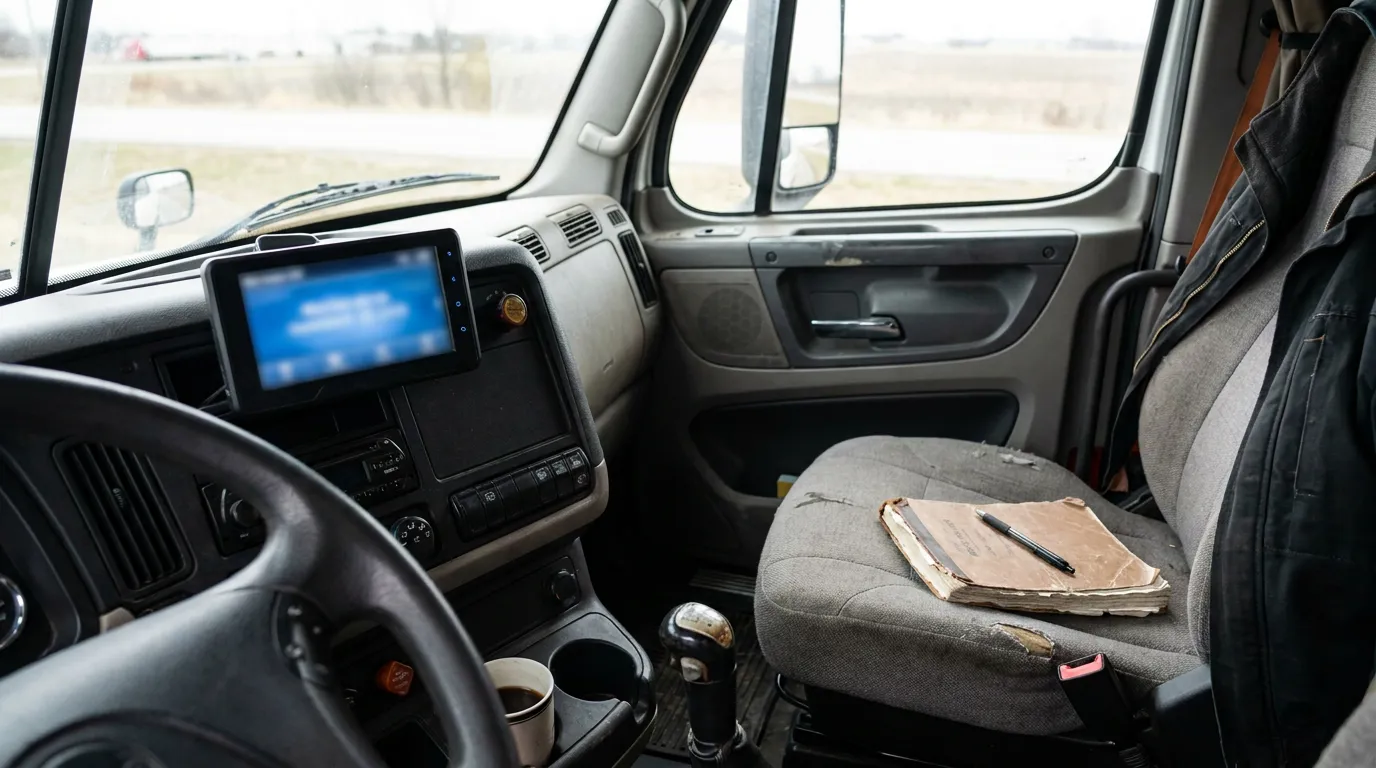
Breaking Down the 11-Hour Driving Limit
The rule operates as part of a layered scheme. Under FMCSA’s hours of service regulations, a property-carrying driver may generally drive a maximum of 11 hours after 10 consecutive hours off duty. That cap works alongside a separate on-duty window, a required 30-minute break after 8 cumulative hours of driving, and weekly 60-hour/7-day and 70-hour/8-day limits.
A second provision caps the total workday window at 14 hours. Under 49 CFR § 395.3(a)(2), a driver generally may not drive beyond the 14th consecutive hour after coming on duty, following 10 consecutive hours off duty, and off-duty time inside that window does not extend it. A driver who spends hours loading, fueling, or waiting at a dock may run out of lawful driving time before hitting 11 hours behind the wheel. Limited exceptions, such as adverse driving conditions and sleeper-berth provisions, can modify these calculations.
These limits exist because regulators identified fatigue as a recurring crash factor. FMCSA frames its hours of service scheme as a means of reducing driver fatigue and improving roadway safety, a purpose that can matter in litigation, since a rule designed to prevent fatigue-related harm may support an argument that a violation contributed to the type of injury it sought to avoid, subject to how Colorado courts treat regulatory standards of care.
Why These Rules Apply in Lakewood
Colorado does not need a separate statute for these limits to govern a local crash. 49 CFR Part 395 generally applies to interstate commercial motor vehicle operations under 49 U.S.C. 31136 and 49 CFR 390.3, meaning the same federal standard enforced elsewhere may apply to a tractor-trailer traveling through Jefferson County. Colorado has also adopted federal safety rules for many intrastate carriers by reference, though certain intrastate-only operations may fall under modified state requirements, so the applicable framework depends on the carrier’s operating authority and trip type.
Terrain adds another layer of risk here. Long descents, elevation changes, and sudden weather shifts demand alertness a driver near the end of a 14-hour window may not have. Our discussion of truck accidents in mountain passes explores how Colorado geography can compound driver error.
How Truck Driver Hours of Service Violations Cause Crashes
Fatigue can degrade reaction time, judgment, and lane control long before a driver falls asleep. Federal crash data compiled in the agency’s large truck and bus crash facts report categorizes driver-related contributing factors, including fatigued or asleep drivers, alongside other violations tied to driving time rules. This dataset offers context for understanding HOS violation patterns, though reported factors are not findings of fault and do not establish causation in any individual case.
The physics of the collision may help explain why injuries tend to be catastrophic. NHTSA’s heavy truck crashworthiness research examines occupant protection and crash outcomes in collisions involving heavy vehicles, reflecting the substantial mass disparity between a loaded tractor-trailer and a passenger car. A fatigued driver who brakes a fraction of a second late may transform a survivable event into a devastating one.
Common fatigue-driven failures our attorneys see include:
- Delayed braking approaching stopped traffic at signalized intersections
- Drifting across lane lines or onto shoulders without correction
- Missed following distance on downgrades, leading to rear-end impacts
- Failure to perceive slowing vehicles, bicyclists, or pedestrians in low-light conditions
💡 Pro Tip: Photograph the truck’s USDOT number and trailer markings at the scene if you are physically able. Identifying the correct motor carrier early may help counsel send preservation demands to the right company.
The Evidence That Proves an HOS Violation
Electronic records have largely replaced the paper logbook as the central proof source. 49 CFR Part 395, Subpart B sets out electronic logging device requirements for recording hours of service, and those records often provide the clearest picture of when a driver started, stopped, and drove. Some operations remain exempt from the ELD mandate, including certain short-haul and older-engine vehicles, so paper records may still be at issue. ELD data can be cross-checked against other records to expose discrepancies.
Corroborating Records That Strengthen a Claim
ELD data becomes far more persuasive when it lines up with independent documentation. Fuel receipts, weigh station records, toll transactions, dispatch messages, bills of lading, and GPS telematics can confirm or contradict a driver’s reported duty status. When these sources conflict with the log, the inconsistency may support an argument that the carrier tolerated or encouraged noncompliance, though additional proof of the carrier’s knowledge or practices is usually required.
| Evidence Source | What It May Show |
|---|---|
| ELD / driver logs | Actual driving and on-duty hours |
| Dispatch and messaging records | Pressure to meet unrealistic delivery windows |
| Fuel and toll receipts | Vehicle location at specific times |
| Maintenance and inspection files | Whether the carrier prioritized schedule over safety |
| Driver qualification file | Prior violations or training gaps |
Preservation timing is a practical concern. Federal rules require carriers to retain records of duty status and supporting documents for limited periods, commonly six months, and internal retention policies for telematics data may be shorter, so a prompt spoliation letter is often advisable. Whether any particular record survives depends on the carrier’s practices and how quickly counsel acts.
Holding the Carrier Accountable, Not Just the Driver
A driver rarely exceeds the FMCSA driving limit in a vacuum. Under agency-relationship principles recognized in Colorado tort law, an employer may be held vicariously liable for a driver’s negligence committed within the scope of employment. Separate theories, including negligent hiring, retention, training, or supervision, may apply when a carrier knew or should have known of a pattern of noncompliance, though some courts limit those claims where the employer has admitted the driver acted within the scope of employment.
These theories are fact-dependent and frequently contested. Carriers often argue the driver was an independent contractor or that the log violation had no causal connection to the crash. Courts may consider the degree of control the carrier exercised, the compensation structure, and the operating authority under which the trip was made, and federal leasing regulations may affect how that relationship is characterized.
Shared Fault and Your Colorado Semi-Truck Claim
Colorado follows a modified comparative negligence approach. Under C.R.S. § 13-21-111, a plaintiff may not recover if their negligence is as great as the negligence of the person against whom recovery is sought, and any award is reduced in proportion to the plaintiff’s share of fault. The doctrine of comparative negligence measures how much a plaintiff’s own conduct contributed to the injury and may reduce recoverable damages proportionally.
Expect the defense to raise fault allocation early. Insurers commonly suggest the injured motorist was speeding, changed lanes abruptly, or braked without warning. Evidence of truck driver hours of service violations may counterbalance those arguments by focusing attention on a preventable regulatory failure that placed a fatigued driver on a Lakewood roadway.
Practical Steps After a Fatigue-Related Truck Crash
What you do in the first weeks can shape what evidence remains available. Medical documentation, scene evidence, and carrier records each serve a distinct function, and gaps in any one category may create leverage for the defense.
- Seek prompt medical evaluation and follow through on recommended treatment
- Request the Lakewood Police Department or Colorado State Patrol crash report
- Avoid recorded statements to the carrier’s insurer before consulting counsel
- Preserve damaged property, clothing, and any dashcam footage
💡 Pro Tip: Keep a short daily journal describing pain levels, missed work, and activities you can no longer perform. Contemporaneous notes often carry more weight than a recollection offered months later.
Deadlines deserve careful attention. Colorado generally allows three years to file a tort action arising from the use of a motor vehicle under C.R.S. § 13-80-101(1)(n), and wrongful death claims are typically subject to a two-year deadline, while claims involving a public entity require written notice within 182 days under the Colorado Governmental Immunity Act. Tolling and discovery-rule exceptions exist in limited circumstances and are generally interpreted narrowly, so no injured party should assume an extension will apply.
Working With a Lakewood Truck Accident Attorney
Commercial trucking litigation involves parties and records that ordinary car crash claims do not. A truck driver hours of service violations lawyer can work to identify the carrier, the trailer owner, the freight broker, and any maintenance vendor whose conduct may have contributed. Building that map early tends to matter more than any single document.
Depth of experience can influence how a case is developed. On average the attorneys at Mintz Law Firm have 20+ years experience. These years of service reflect the depth of knowledge, skills, and professional expertise developed through years of hands-on experience, and demonstrate not only longevity but also the ability to apply that experience effectively, navigate challenges, and represent clients with confidence and consistency. Since 2016 Mintz Law Firm has provided consistent legal help to maximize our clients’ recoveries, recovering $20M+ annually for our clients. Past results do not predict or guarantee the outcome of any future matter, because every case turns on its own facts.
Frequently Asked Questions
1. Does an HOS violation automatically mean the trucking company is liable?
No. You generally must still prove duty, breach, causation, and damages. A documented violation may be powerful evidence of breach, but the defense may argue it did not cause the collision.
2. What if the driver’s logs look compliant?
Falsified or incomplete logs are not unusual. Counsel can compare electronic logging device entries against fuel purchases, GPS data, and dispatch communications. Inconsistencies across sources may reveal unrecorded driving time.
3. Can I still recover if I was partly at fault?
Possibly, depending on your assigned percentage. Under Colorado’s modified comparative negligence statute, recovery is barred once a plaintiff’s fault is as great as the defendant’s, and any award is reduced by the plaintiff’s percentage of fault. Fault allocation is a fact question that juries and adjusters often view differently.
4. How quickly should I contact an attorney after a Lakewood truck crash?
As soon as you are medically able. ELD data and carrier communications may be overwritten under routine retention practices. Early involvement may allow counsel to demand preservation before that happens.
5. Does the 11-hour rule apply to every truck on I-70?
Not necessarily. The rule generally applies to property-carrying commercial motor vehicle drivers subject to 49 CFR Part 395, and passenger-carrying operations, certain short-haul operations, and some intrastate carriers may follow different or modified requirements.
Protecting Your Rights After a Fatigue-Related Collision
The 11-hour driving limit reflects a federal judgment that tired drivers behind rigs that may weigh up to 80,000 pounds create unacceptable risk. When a carrier or driver disregards these driving time rules, the resulting crash may be traceable to a documented, provable decision rather than bad luck. Establishing that connection generally requires prompt investigation, careful record analysis, and an understanding of how trucker liability theories interact with Colorado’s comparative fault framework. Outcomes always depend on the specific facts, and no article can substitute for a review of your circumstances.
You do not have to untangle federal trucking regulations while recovering from serious injuries. Reach out to Mintz Law Firm for a discussion of your options, call 303-732-8919, or schedule your consultation today.
Disclaimer: This content is for informational purposes only and is not legal advice. Every case is unique, and results may vary. Consult an attorney about your specific circumstances.