
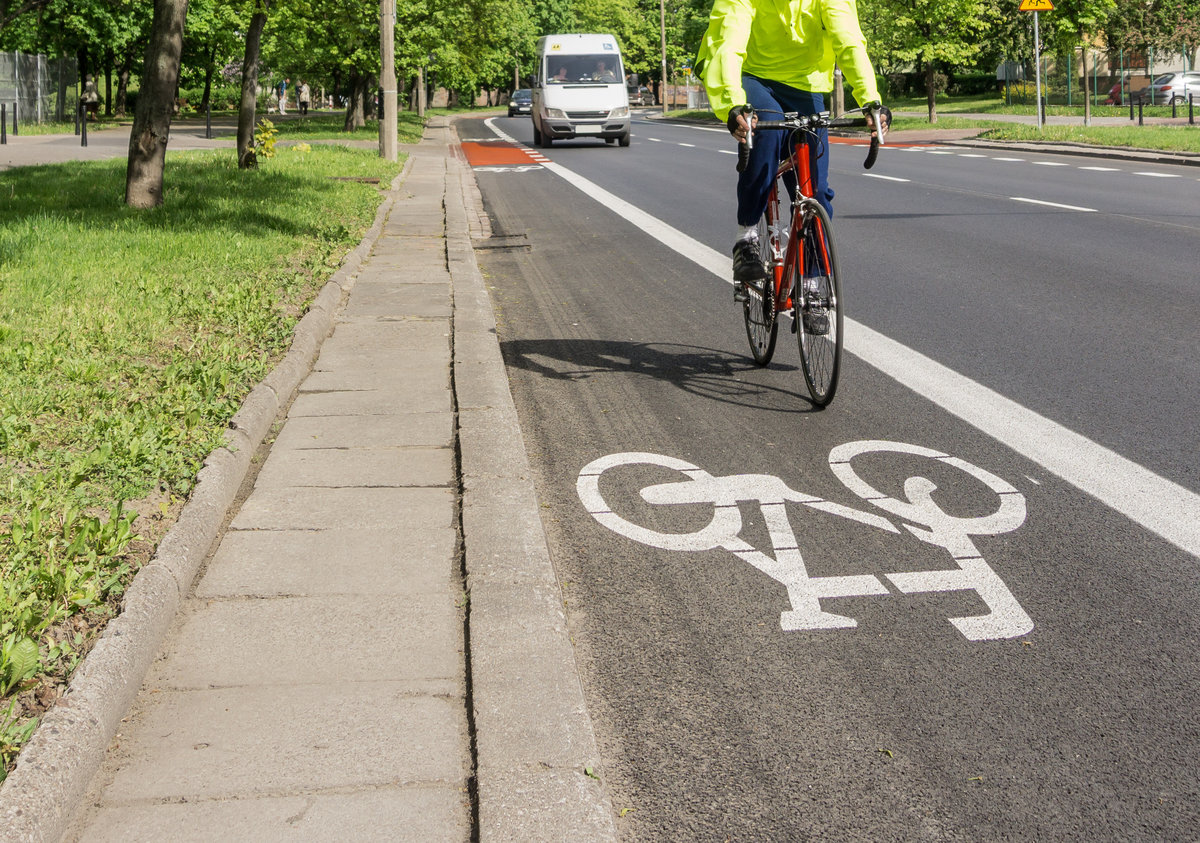
As the snow melts and the days grow longer, cyclists across Colorado return to the roads and trails. Spring is one of the most popular seasons for riding, but it is also a season of mixed conditions: winter sand and gravel still sit along road shoulders, potholes open up after freeze and thaw cycles, and drivers who have not shared the road with bikes for months are suddenly passing riders again. When a motorist fails to share the road responsibly, a cyclist can suffer serious injuries in an instant, and the first questions are usually about which traffic rules applied and who is responsible.
If you have been hurt in a bicycle accident this spring, you have rights under Colorado law. Our founder, David J. Mintz, has represented injured Coloradans for more than 35 years, and our Lakewood bicycle accident lawyers handle crashes involving cyclists across the Denver metro area. We treat each client as a person, not a case number. Below, we focus on the specific Colorado bicycle rules that most often decide fault in a spring crash, and on the deadlines that apply afterward.
Colorado Bicycle Laws That Shape Fault in a Crash
Colorado treats bicycles as vehicles on public roads, so cyclists generally share the same rights and duties as drivers, along with several rules written specifically for people on bikes. When an insurer or a court decides who caused a crash, the first question is usually which of these rules each party followed. Our post on who has the right of way when you are on a bike covers intersections, bike lanes, and sidewalks in more depth. Two rules come up again and again in spring crash claims.
The Three-Foot Passing Rule
Under C.R.S. 42-4-1003(1)(b), a driver overtaking a bicyclist traveling in the same direction must leave at least three feet between the right side of the vehicle, including its mirrors or other projections, and the cyclist. A violation is a class A traffic infraction. When a driver clips a rider with a side mirror or forces a cyclist off the shoulder, the three-foot rule is often the starting point for showing that the driver was negligent.
The 2022 Safety Stop Law
In 2022, Colorado adopted a statewide safety stop rule, now found at C.R.S. 42-4-1412.5. A rider who is 15 or older, or younger and accompanied by an adult, may approach a stop sign at a reasonable speed, which the statute sets at 10 miles per hour or less unless a city or county raises it to as much as 20 miles per hour and posts signs saying so. The rider must still yield to traffic and pedestrians and must stop if safety requires it. At a red light, the rider must come to a full stop and yield, and may then proceed straight or turn right with caution; a left turn on red is allowed only onto a one-way street.
This matters after a crash because a driver or insurer may argue that a cyclist who rolled through a stop sign broke the law. Under the safety stop rule, slowing and yielding at a stop sign can be lawful, so the real question is whether the rider slowed to a reasonable speed and yielded as the statute requires.
Why Spring Brings More Bicycle Crashes
In an April 2025 release urging caution as the weather warms, the Colorado Department of Transportation reported that pedestrian and bicyclist fatalities in Colorado have increased 78% since 2015, and that 2024 was the second deadliest year on record for these road users, with 134 pedestrian and bicyclist deaths. More riders on the road in spring means more chances for conflict with drivers who are not looking for them. Common causes of spring bike crashes include the following.
- Failure to yield at intersections or driveways
- Dooring incidents, where a parked driver opens a door into a cyclist’s path
- Distracted driving, including phone use behind the wheel
- Speeding in residential or bike-heavy areas
- Failing to maintain the required three-foot passing distance
Road conditions can also play a part. Leftover traction sand, loose gravel, and potholes can cause a rider to swerve into traffic or go down. When a road hazard contributed to the crash, the responsible party may be a public entity rather than a driver, and claims against government entities follow special notice rules covered below.
How Shared Fault Works for Injured Cyclists
Colorado follows a modified comparative negligence rule under C.R.S. 13-21-111. You may recover damages as long as your share of fault is less than the fault of the party you are seeking compensation from, and any award is reduced by your percentage of fault. For example, a rider found 20% at fault would recover 80% of the damages. If your share is equal to or greater than the other party’s, recovery is barred.
This is why the details matter. Whether you were riding in a bike lane, whether you had a light at dusk, whether you slowed and yielded at a stop sign, and whether you were wearing a helmet can all come up when fault is assigned. Our post on Colorado’s helmet laws for cycling explains how helmet questions fit in, and riders on electric bikes can read more about recovering damages after an e-bike accident.
What to Do After a Bike Crash in Colorado
The steps you take in the hours and days following a crash can affect your claim. First, seek medical attention right away, even if your injuries seem minor. Conditions such as traumatic brain injuries or internal injuries may not present obvious symptoms immediately, but can worsen without treatment.
After getting medical care, document everything you can. Take photographs of the scene, your injuries, any road hazard, and the damage to your bike and gear. Keep your damaged helmet and bike as they are. Gather the driver’s name, contact information, and insurance details. If law enforcement responds, request a copy of the police report. Witness accounts and traffic or doorbell camera footage, if available, can also be valuable, and that footage is often overwritten within days.
Deadlines for Colorado Bicycle Accident Claims
Colorado sets firm time limits on injury claims, and the right one depends on who caused the crash. For most claims against a driver arising from the use or operation of a motor vehicle, C.R.S. 13-80-101(1)(n) generally allows three years. Many other negligence claims, such as a claim against a private property owner over a dangerous path or driveway, generally fall under the two-year limit in C.R.S. 13-80-102(1)(a).
Claims against a city, county, transit agency, or other public entity carry an additional requirement. Under the Colorado Governmental Immunity Act, C.R.S. 24-10-109, written notice of the claim must be given within 182 days after the injury is discovered, and missing that notice can bar the claim entirely. Because exceptions and immunity rules can change these periods, it is wise to have an attorney review your dates early.
What Compensation Can You Pursue
When a driver’s negligence causes a cycling crash, injured riders may be entitled to recover a range of damages. These can include medical expenses, both current and future, lost wages, pain and suffering, and costs related to long-term rehabilitation. In more severe cases involving catastrophic injuries, the financial impact on a cyclist and their family can be enormous.
Colorado requires drivers to carry minimum liability insurance, but those limits may not cover a serious injury. Depending on your own auto policy’s terms, uninsured or underinsured motorist coverage and medical payments coverage may also be available, so it helps to review your policy before giving a recorded statement or accepting an early settlement offer.
Talk With Mintz Law Firm About Your Cycling Crash
At Mintz Law Firm, we know that being hit on your bike is not just a physical trauma. It is a disruption to your life, your livelihood, and your sense of safety. Founder David J. Mintz has represented injured Coloradans for more than 35 years, and managing attorney Eric C. Staton has been with the firm since 2005. We work on a contingency fee basis, which means you pay no attorney fees unless we recover compensation for you. Case costs, such as filing fees, medical records, and fees for consulting professionals, are separate from attorney fees, and depending on the terms of your written fee agreement, you may still be responsible for some case costs even if there is no recovery. We review those terms with you before you sign.
Whether you are a daily commuter, a weekend trail rider, or a visiting cyclist exploring Colorado’s iconic routes, you deserve an attorney who will pursue your full recovery. If you were hurt in a spring cycling crash, do not wait to get the help you need. Contact us today to schedule your free, no-obligation consultation.
Frequently Asked Questions About Colorado Bicycle Accidents
Do cyclists have to come to a full stop at stop signs in Colorado?
Not always. Under the statewide safety stop law, C.R.S. 42-4-1412.5, a rider who is 15 or older, or younger and with an adult, may slow to a reasonable speed of 10 miles per hour or less at a stop sign, yield to traffic and pedestrians, and continue if it is safe. Some cities and counties raise that speed to as much as 20 miles per hour with posted signs. A full stop is still required when safety demands it, and riders must stop at red lights before proceeding.
How much space must a driver give a cyclist when passing in Colorado?
C.R.S. 42-4-1003(1)(b) requires a driver passing a bicyclist in the same direction to leave at least three feet between the right side of the vehicle, including its mirrors, and the rider. Violating this rule is a class A traffic infraction, and a passing violation can be important evidence of driver negligence in an injury claim.
Can I still recover compensation if I was partly at fault for the crash?
Possibly. Colorado’s comparative negligence statute, C.R.S. 13-21-111, allows recovery as long as your share of fault is less than the share of the party you are claiming against. Your award is reduced by your percentage of fault, so a rider found 20% at fault would recover 80% of the damages. If your fault is equal to or greater than the other party’s, recovery is barred.
How long do I have to file a bicycle accident claim in Colorado?
For most claims against a driver, Colorado generally allows three years under C.R.S. 13-80-101(1)(n). Many other negligence claims generally have a two-year limit. If a city, county, or other public entity may be responsible, written notice is usually required within 182 days after the injury is discovered. Because exceptions can apply, have an attorney confirm your deadline as early as possible.
What does it cost to hire Mintz Law Firm after a bike accident?
Your first consultation is free, and we handle injury cases on a contingency fee basis, so you pay no attorney fees unless we recover compensation for you. Case costs such as filing fees, records, and consultant fees are separate from attorney fees, and depending on the terms of your written fee agreement, you may still be responsible for some case costs even if there is no recovery. We explain those terms before you sign.